

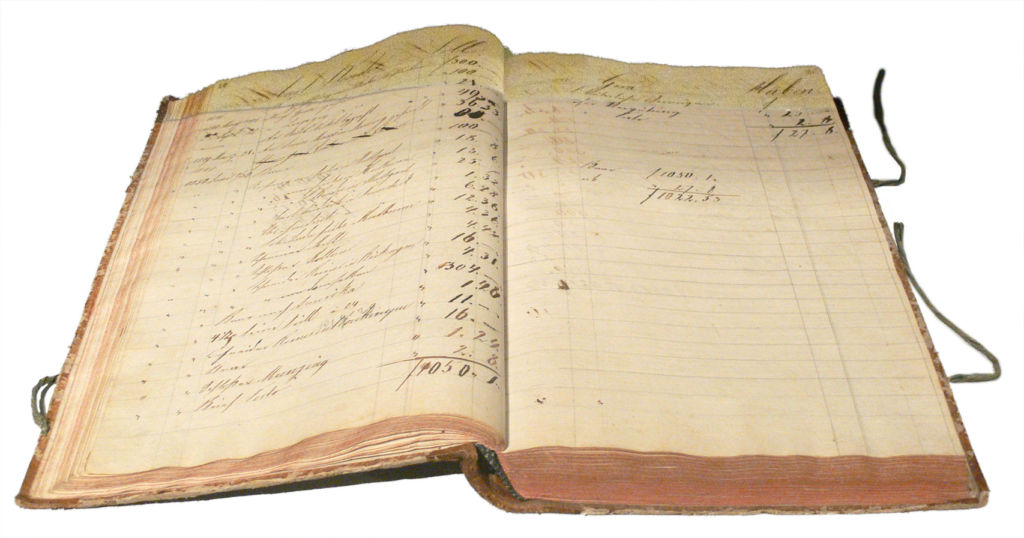
My father was a public sector leader for many, many years. For a good portion of his life he led all the “Postmen Pats” in one of Copenhagen’s larger post offices. At the time, a very heavy daily logistical challenge with a staff of around 250, and lots of manual effort required to process massive amounts of letters and face-to-face financial transactions involving real cash. I know it sounds medieval – real paper, cash, stamps, and ledger books the size of a 37-inch LCD screen …
From a young age I could see how he somewhat effortlessly performed value-based leadership for hundreds of employees. A very diverse crowd mostly consisting of public servants with a stern do-it-for-queen-and-country attitude, but also larger groups of temps from various schools and universities.
It was back in the days before the appraisal interview was invented. My impression was that everyone in the office did their job quietly and did it well. On the other hand, the objectives were also quite clear and unambiguous, and the expected workload largely predictable.
Occasionally, an employee would require a friendly corrective conversation. In the extreme – a follow up conversation(!)
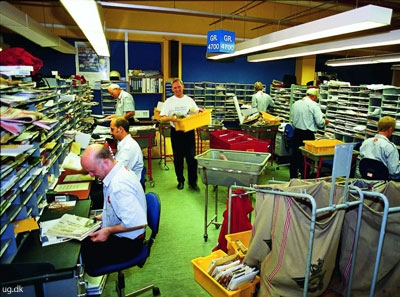
The job itself was not necessarily particularly complex in nature, but it took some personal tenacity. A postman had to turn up for duty at six o’clock in the morning, six days per week sorting the mail for their individual districts before loading their bicycles around eight o’clock. Year-round in all kinds of weather.
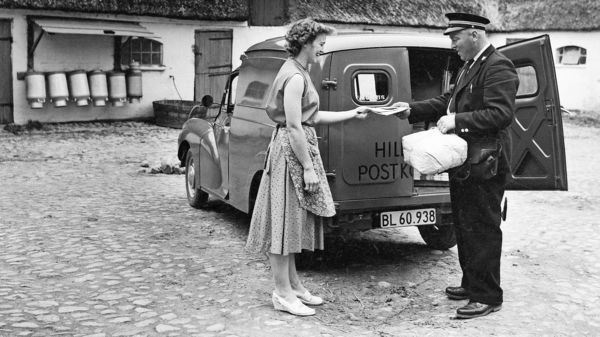
It was also back in the days where the postman had more of a societal function. Postmen in Denmark would always be recognizable in a red uniform and would reach every far flung corner of the country. They would often carry a significant amount of cash for various payments ( wellfare, insurance etc.) and they would claim payments too.
Because of the societal function my father was heavily reliant on the planned workforce to turn up. He himself had an unprivileged background and was quite aware that a “check in the mail” that didn’t turn up as planned could have significant impact on an entire family.
As a child I remember how he would occasionally call me early in the morning on Saturdays and ask me to run a couple of blocks down the street to wake up one of the younger postmen who had such a hard time getting up in the morning and overslept fairly regularly. It was a two way street. My father really needed the hand on deck and the postman really needed (to keep) his job.
How far do you stretch to keep things going?

Don’t get me wrong. He was not a softy. My father was rather stern in his presence at work, and rather clear(!) in the way he communicated. But he also understood and prepared for the inevitable occasional hiccup.
Particularly around the main holidays in Denmark such as e.g. Christmas and Easter my father would to a much larger degree take the social aspects of being a leader into consideration. Such holidays can be particularly hard on a smaller handful of employees. Maybe involuntarily away from their loved ones, divorced with bad memories (or bad conscience), tempted by the alco-devil etc.
He just knew that one or two, who would otherwise work dilligently all through the year, would take the plunge. So as an example he had a backdoor agreement with the local watering holes that if a postman was about to take a slightly too long “break” they would give my father a quick call enabling him to ensure that he could send someone over to support the misfortunate postman so the mail would be delivered as planned.
Today, the likelyhood of someone posting the postman’s misfortune on SoMe instead of assisting him, and consequently exposing both the postman and the post office as the subject of a public s… storm is rather high.

Would that happen today?
To my father, it was about protecting the brand, retaining the resource, and ensuring steady exeuction of process. He lived to be 87 years old. Struck by Alzheimer’s but very clear minded when it came to something that happened many, many years ago. When we discussed the subject he was absolutely convinced that there would be a lot less operational maneuverability in this day and age for exercising the type of servant leadership he did back then.
Through his leadership he made room for a wide spectre of individuality, and ensured that these individuals would not only keep their job but would actually perform very well except for the occasional hiccup that never impacted delivery of the core product due to his proactive measures.
In summary, he gave trust to the postmen and postwomen. I am certain that some of them, in today’s workplace, would likely not enjoy the same kind of leadership approach. I understand and recognize that the world has changed – radically. But back then, simply because my father communicated his expectations, trust, authority and confidence in the individual, he instilled a very strong sense of responsibility that made the employee go the extra mile in return. Also in individuals who, today, would probably not be able to write up a fancy resume – or interview well at all – but yet perform very well on the job.
It seemed to be more of a symbiotic relationship.
What is the extract?
Projecting all of the above into a more contemporary setting, my point is:
Engage in your staff and get to know them.
Understand their challenges.
Help them to grow to be a better version of themselves.
As their leader, you are often far more likely to see obstacles ahead of them before they do. Address these obstacles proactively to enable success for both of you.
Instill a sense of responsibility relative to their job role and preferably just a notch above.
I guarantee you it will pay off.
In memoriam – Gunnar Madsen: 1934 – 2021
Requiescat in pace