Excellence Insights with Business Model Excellence Institute.
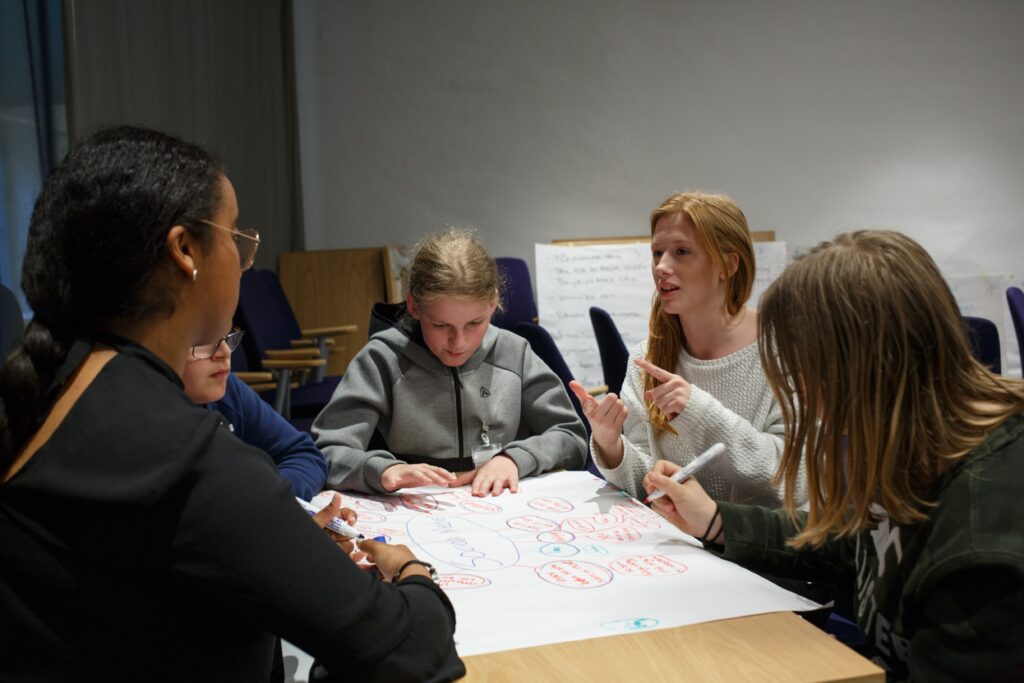
On a glorious Friday morning, BMEI had invited a diverse group of business leaders and advisors to join them for a session of powerful conversations on business transformation, and other invaluable interaction that sparks the thought process towards value based leadership.
Intriguing real-life perspectives from Haldor Topsøe and Novo Nordisk on how their dedication to instilling a value based mindset is transforming their businesses.
To get a feel for the intensity of the day please watch this video snippet.
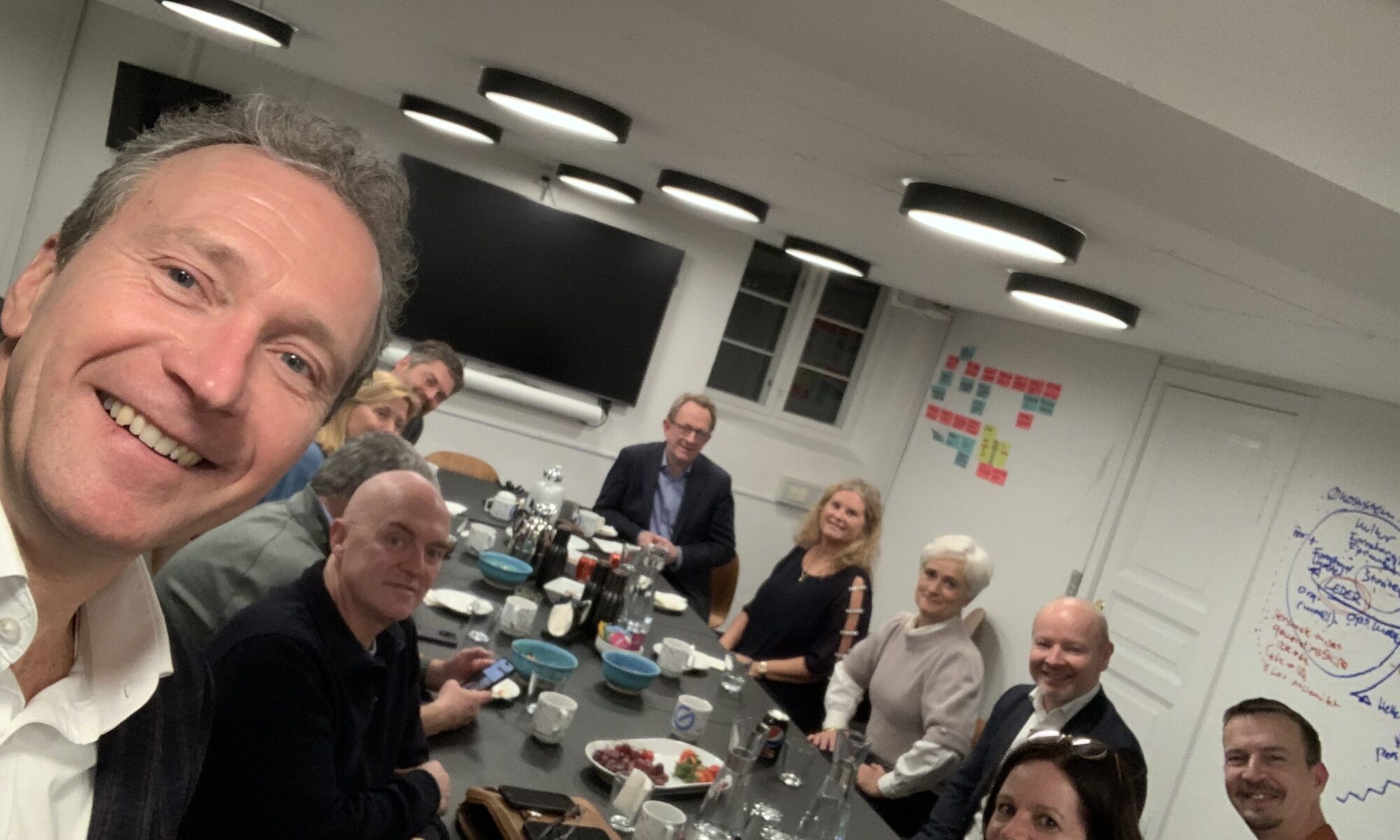
I recently had the pleasure of facilitating a evening of “unplugged” business eco system discussions with a group of very experienced executive business leaders from a variety of industries such as engineering, digital services, hospitality, pharma, public sector, physical security, convenience … etc.
The idea behind spending an evening in informal settings discussing with other leaders, is to bring a common understanding of the components of the corporate eco system to the table, and then, organically, walk through each leaders successes and challenges and place these business items in the eco system.
Interestingly, when walking through the challenges, there are more similarities across industries than one would expect, which in itself is a valuable result of having the opportunity to discuss this with other executive business leaders. Your challenges are rarely unique and there is room for sparring with other leaders.
Similarly, looking at the primary business focus areas ahead, and relating that to what was identified in the first part of the discussion, brings helpful clarity to what investments are required (resources, direction, leadership focus), and where emphasis should be put for these goals to actually materialize as planned – or where strategy has to be rethought and revamped.
It is an exercise that is easy to approach and it lends itself to transforming the takeaways directly into the company strategy.
Interested in organising a facilitated eco system discussion in your leadership team? Feel free to contact me!
Det har i de seneste år været knap så comme il faut, at ledere skulle prøve kræfter med at løbe mindst ét maratonløb. Der har været massiv debat og mange meninger om erhvervslederes (lidt for) store engagement i ekstremsportsgrene, og hvordan det fører til mennesker, der fokuserer alt, alt for meget på den fysiske præstation, og ikke i samme omfang på den mentale læring der bør følge med som en naturlig del af ens personlige udvikling.
Kan man træne så intensivt og samtidig have kapacitet til at være til stede i familien og på arbejde, og så i øvrigt have en kognitiv reservetank tilbage til Homer? Får man tunnelsyn på sin egen fysiske præstation?
ASH bliver sikkert knotten, men jeg vil alligevel gerne slå et slag for det forkætrede maratonløb. I hvert fald i allegoriens verden … Hvad enten det drejer sig om det ene man får løbet i sit liv, eller det er Klaus Holse-metoden der foreskriver ét om året.
Der er et vist basalt allegorisk overlap mellem at skulle planlægge og gennemføre et maraton, og at skulle gennemgå f.eks. en organisatorisk transformation i en virksomhed. Begge dele kræver tilstrækkelig forberedelse for at kunne gennemføre, og begge dele finder som regel sted samtidig med, at man skal passe alt det, man plejer at passe. Både hjemme og på arbejde. Og netop her er det overordentlig hjælpsomt for en leders (selv)indsigt at tage den medicin, man udskriver til organisationen.
Fra et karriere- og forretningsmæssigt synspunkt er pointen med at skulle løbe den forbistrede maraton, at udfordringen rykker grænser permanent for løberen, og at man derigennem opnår en langt større forståelse for ens egen uudnyttede kapacitet – særligt den uudnyttede mentale kapacitet. Man kan helt sikkert opnå den samme indsigt i andre sportsgrene eller andre livsdiscipliner. Maratonløbet kan dog være et godt match for mange fordi:
– Det er de fleste forundt at kunne træne sig op til at gennemføre
– Det kræver ikke enorme investeringer i udstyr
– Man kan tilpasse træningen til sine omgivelser og, tildels, livsstil (måske ikke 25 glas vin om ugen i træningsperioden)
– Distancen udfordrer de fleste mennesker mere end tilstrækkeligt til at flytte grænser i mange forskellige kategorier
Planlægning
At gennemføre maratondistancen kræver disciplin, vedholdenhed og udholdenhed. Lad os bare være ærlige – det kan være en forholdsvis monoton aktivitet at løbe 42 km. Det kan dog sidestilles med at eksekvere en langsigtet strategi. Det er sjældent en fest hver dag.
Photo By Jason Goodman on Unsplash
Der vil være en god portion monotoni, man skal forholde sig til, for at fastholde motivationen til at sætte den ene fod foran den anden. Gennem at måle fremdriften og sammenligne med de planlagte milepæle, bevarer man tilliden til at man er på rette vej mod målet.
Derfor er det altid vigtigt at have familie og venner med på råd i planlægningen af træningsprogrammet, ligesom det er vigtigt at hele virksomheden er en del at strategien. Alle skal være bevidste om, hvor og hvordan de passer ind, og hvordan de understøtter virksomhedens stræben efter at nå fælles mål.
Helt elementært kræver det, at man lægger en plan ud fra de resourcer og evner man forventer at have til rådighed, og så efterfølgende eksekverer planen. Simpelt, ikke sandt?
Selve processen er grundlæggende kompetenceskabende. Den erhvervsmæssige vinkel er, at det i høj grad er med til at skabe forståelse for den vedholdenhed og tidsmæssige rejse, der kræves for at gennemføre alle de aktiviteter, der indgår en længerevarende strategi eller transformation. Man skal jo stadig ud på træningsturen, selvom det regner og man ikke ligefrem mærker motivationen sprudle indeni. Det er der læring i.
Praktik, restitution og motivation
Hvis man kan løbe 5 km uden efterfølgende at skulle have fat i en hjertestarter skal man som minimum, sådan ungefähr, følge et 16-ugers træningsprogram. Det vil gøre de fleste i stand til at gennemføre et maraton uden at pådrage sig permanente skader på hverken krop eller privatliv.
Photo by Dan Burton on Unsplash
I løbet af de 16 uger er det naturligvis über-vigtig for slutresultatet, at man holder sig til planen og ikke bliver fristet til at haste sig igennem, blot fordi alt synes at køre lidt for godt. Det kræver opbygning af muskulatur og mental stamina på samme måde som en virksomhed skal opbygge robusthed og evne til at gennemgå de længerevarende aktiviteter, eller strategiskift, som virksomheden står over for. Her er restitution en altafgørende faktor. Hvis man gennem et længere træningsprogram ikke tillader sig at restituere, er det overvejende sandsynligt at man påfører sig skader. Skader som kan sætte programmet tilbage i ugevis.
Overvej dét, når personalet er presset. Et udpint personale formår ikke at yde nær det samme, og et udpint personale er ikke et vedvarende personale. Uanset hvor i hierarkiet man befinder sig. Der kan hurtigt gå en afgørende del af virksomhedens intellektuelle kapital tabt, hvis man udelukkende fokuserer på færdiggørelsen af enkelte aktiviteter og ikke på blivende styrke eller permanent operationel forbedring.
Ens lederstjerne kan også falme ret hurtigt, hvis man ikke udviser forståelse for udbrændthed, og det vil hovedsageligt blive opfattet som tonedøvt, og orienteret mod lederens egen vinding fremfor organisationens succes.
Derfor er det uhyre sundt for en leder at mærke på egen krop hvordan restitution forøger kapacitet.
Et andet formål med træningsperioden for maratonmotionisten er, at lære kroppen at brænde fedt i ens egne depoter i stedet for kulhydrat.
En virksomhed, der står overfor at skulle eksekvere en langsigtet strategi, skal hele tiden være klar til at forbedre sin egen præstationsevne, efterhånden som aktiviteterne skrider frem. Det sker sjældent på én gang. En leder er dybt afhængig af sit personales engagement i at forbedre det område, de har ansvar for.
Efterhånden som organisationen, gruppen eller det enkelte menneske bliver engageret i de forskellige operationelle og taktiske dele af planen, vil der opstå en læring i organisationen, så organisationen selv i langt højere grad bliver opmærksom på de områder, store og små, der løbende – wink wink – kan forbedres f.eks. ved at benytte sig af LEAN, PDCA, Six Sigma, SAFe – eller blot simpel individuel frihed til at gennemføre forandringer?
Altså blive mere operationel effektiv i stedet for blot at brænde mere kapital eller flere ressourcer af.
Tilfør næring
Godt i gang med træningsprogrammet er en stor del af læringen, at indtage føde og væske undervejs. Det er virkelig en kunst og meget lettere sagt end gjort. Der er uendelig meget klistret kulhydrat-stads på markedet. Produkter, der synes oplagte og lækre, når man smager på varen i butikken, kan føles decideret kvalmende og uspiselige, når man har passeret 21 km ude i virkeligheden. På det tidspunkt vil mange bare have noget mere neutralt at spise og et glas vand, tak.
Photo by Brooke Lark on Unsplash
Undervejs er det også vigtigt for de fleste at blive opmuntret. At løbe langt kan som sagt ofte være en monoton beskæftigelse, så det hjælper i høj grad med udefra kommende tilråb og rygklap.
Ingen går igennem transformationer uden at skulle bruge dedikeret og signifikant tid på at holde motivationen oppe i organisationen. Det er nu, at den tjenende leder skal træde i karakter og tage aktiv og meget synlig del i at fjerne forhindringer for fremdriften og derigennem sikre, at motivationen er i top.
Når man gennemgår en transformation, er det heller ikke nødvendigvis den samme type kommunikation og de samme motivationselementer, der kan drive værket videre, når man er nået halvvejs gennem programmet. Leder-jubel-kick-off-optimisme kan godt virke kvalmende på det tidspunkt. Husk at få etableret en formél videndelingsplatform, få udpeget transformationsagenter, tag temperaturen på engagementet ofte og kommuniker ærligt – også når programmet skal justeres.
I agile virksomheder, der f.eks. opererer med Scaled Agile, er der i sagens natur en høj grad af “transformations-kontinuitet”. Ord som Continuous og Relentless optræder ret mange gange, hvilket også for nogle mennesker kan fremstå som en kontinuerlig ørkenvandring, hvis man ikke som ledelse forstår også at etablere en følelse af fuldførelse i det daglige – en sense of accomplishment – og at illustrere, hvordan virksomheden samlet set bevæger sig mod et klart mål. Der altså stadig, også i agilt sammenhæng, et udtalt behov for lederskab med indsigt i, hvilken vedholdenhed der kræves aka. People Leadership.
Muren – Det gør ondt i hjernen
De fleste der har gennemført et maraton, vil nikke genkendende til, at det ikke nødvendigvis gør lige så ondt i benene som det gør i hjernen, når man rammer den såkaldte mur. Man har jo trænet sin muskulatur til at kunne løbe langt, men hjernen har bare ikke drukket af samme trug – og det er lige præcis hér, at miraklet opstår.
Photo by Pete Willis on Unsplash
Det står nemlig klart i bevidstheden, at man jo har gennemført træningsprogrammet og nu er relativ tæt på målet, og man overvinder derfor sig selv midt i moradset af 10 liter mælkesyre i benene og 10 km til mål.
Det er en forunderlig proces, men lige præcis dér får man rykket sin helt personlige grænse for udholdenhed og forstår, hvor stor mental kapacitet man egentlig indeholder. Man opnår forhåbentlig i samme moment en unik forståelse for hvor meget det kræver at flytte et menneskes mentale grænsepost, og det kan man som leder tage med direkte ind i organisationen, når man måske synes at den ikke flytter sig hurtigt nok.
Hvis ikke, har man så været god nok til at planlægge og gennemføre det nødvendige træningsprogram for at nå i mål med hele organisationen ?
Forvent ikke urimeligheder og vær i stand til at fejre dåden
Forvent ikke urimeligheder af hverken dig selv eller andre. Det resulterer oftest i permanente skader. Hvis man i processen overbebyrder de eksisterende ressourcer og evner, står man afpillet tilbage efter løbet med en udbrændt familie. Operationen lykkedes, men patienten døde.
Photo by Victor on Unsplash
Efter en transformation, eller en længere periode med agil uorden, kan man stå tilbage med en død organisation, der hverken kan eller vil mobiliseres til andre fremtidige transformationsinitiativer. Og i erhvervslivet er transformationer som oftest en konstant.
Målet med ny strategi, transformation og træning er at bringe krop og sind, eller organisationen, til et andet og bedre sted – så man skal selvfølgelig altid huske at markere milepælene i en positiv ånd, efterhånden som programmet skrider frem. Hvad har vi lært? Skal vi justere? Og så i øvrigt tillykke til os!
Derfor kan jeg også kun tilskynde til, at man aldrig lægger en mere aggressiv træningsplan end man om aftenen efter selve løbet kan fejre præstationen med at spise en god middag med sin familie, en ven og/eller medløbere, og hvor man stadig er i stand til at konversere højstemt om, hvor den næste rejse går hen – fremfor gutturale “aldrig mere” grynt.
God tur!
and now in English:
It has become less comme il faut for leaders to take on the quasi-kliché challenge of running at least one marathon. A debate has evolved on the subject and many opinions aired about business leaders’ (slightly too) rigid commitment to extreme sports, and how it, in some cases, leads to people who focus far too much on physical performance and not sufficiently on mental capacity increase that should come along as a natural part of one’s personal development.
Can you exercise intensively and at the same time have the capacity to be present with your family and at work? Can you maintain a cognitive reservoir left for Homer, instead of developing tunnel vision on your personal physical results?
ASH (a Danish columnist who has pointed out the potential issues with MAMIL-leaders with little consideration for personal intellectual development) will likely be cross, but I’d still like to highlight the marathon. At least in the world of allegories … Whether it’s the one you get to run in your life, or it’s the Klaus Holse method that prescribes one per year.
There is a basic allegorical overlap between planning and completing a marathon, and having to go through e.g. an organizational transformation. Both require sufficient preparation to be able to complete, and both usually coincide with everything else on your plate at home and at work. From that perspective, it’s extremely helpful for a leader’s self-insight to take the medication you prescribe to the organization.
The idea behind running that (damn) marathon is that the challenge pushes boundaries permanently for the runner, and that you thereby achieve a much greater understanding of your own untapped capacity – especially the untapped mental capacity. One can surely gain the same type of insight through other sports or other life disciplines but the marathon offers itself up as a good option because:
It is within most people’s physical capability to complete the necessary traning program
It does not require huge investments in equipment
You can adapt the training to your surroundings and, in part, lifestyle (maybe not 25 glasses of wine per week during the training period)
The distance challenges most people to move boundaries in many different categories
Planning
Conquering the marathon distance requires discipline, tenacity, and perseverance. Let’s be honest – running 42km (or 26 miles) can be a relatively monotonous activity …
However, it compares somewhat with executing a long-term strategy. Rarely bliss every day. There will be a larger quantum of monotony to deal with while maintaining the motivation to put one foot in front of the other.
Photo By Jason Goodman on Unsplash
But by measuring progress and comparing it with your planned milestones, you manage to retain confidence that you are on the right path towards your goal. It is good to be ambitious and even better if your’re prepared adjust as you go along.
It is critical to have family and friends on board when you are planning the training program – in the same way that it is important to include the entire company in the strategy. Everyone must be aware of where and how they fit in, and how they support the company’s efforts to achieve common goals.
In essence, it requires that you lay out a plan based on the resources and (cap)abilities you expect to have available to you, and then subsequently execute that plan. Sounds simple, right?
The planning process itself is fundamentally competence-building. It greatly helps to create an understanding of the perseverance and the journey required to complete all the tactical items of a long-term strategy or transformation. You still have to hit the road when it’s windy and rainy, and the sofa’s calling your name – loudly.
Practicalities, recovery and motivation
If you can run 5 klicks without without desperately reaching for a defibrillator, you must as a minimum (approx.) follow a 16-week training program. It will enable most people to complete a marathon without incurring permanent damage to neither their bodily mechanics nor their family. During the 16 weeks it is of course über-important for the end result that you stick to the plan and are not tempted to rush through just because everything seems to be “running” a little too well.
It requires buildup of muscles and ligament (that holds it all together) as well as mental stamina in the very way that a company must build resilience in support of the ability to traverse the long-term activities that underpin strategic shifts.
Photo by Dan Burton on Unsplash
With that in mind, recovery is a determining factor. If you do not allow yourself to recover whilst executing a lengthy training program, it is very likely that you will suffer injuries. Injuries that can set the entire program back for weeks.
Consider this when your staff is under pressure. An exhausted staff group is rarely performing well, and exhausted staff is not permanent staff. Regardless of where one is placed in the hierarchy.
A crucial part of the company’s intellectual capital can vanish quickly if your focus is solely on the completion of individual, arbitrary activities instead of on lasting organizational strength, or permanent operational improvements.
One’s leadership star can also fade quite quickly if one does not recognize staff burnout. You will be perceived as tone deaf, and oriented towards your own gain rather than overall organizational success.
Therefore, it is extremely healthy for a leader to experience how recovery increases capacity.
Another key purpose of the 16-week training period is to teach the body to burn fat instead of carbohydrate. A company facing the task of executing a long-term strategy must be constantly ready to improve its own performance as the activities progress.
A leader is deeply dependent on the staff’s commitment to improve the area for which they are responsible. As the organization, group or individual becomes involved in various operational and tactical parts of the plan, the “self-learning organization” will evolve – if you let it. I.e. the organization becomes more and more aware of the areas, large and small, that can be continuously improved through LEAN, PDCA, Six Sigma, SAFe – or just simple individual freedom to implement change.
Become more operationally efficient instead of just burning more capital and/or more resources.
The importance of nutrition
Well on your way, another key part of the program is about learning how to eat and drink on the run. It really is an art and much easier said than done. There is an infinite variety of sticky carbohydrate gels on the market. Products that seem delicious when you taste it in the store can feel quite yucky and completely inedible when you have passed 21 km in real life. At that point, most people prefer something slightly more neutral to eat – and a glass of water, thanks.
Similarly, it is not necessarily the same type of communication and the same motivational elements that will drive people forward once you are halfway through the program. Leader-cheering-kick-off optimism can come across nauseating at that point in time.
Long distance running can, as mentioned earlier, be quite a monotonous pastime, so spectators cheering and clapping is extremely helpful. When you have reached the outer perimeter of the route, the spectator mass generally seem to dilute a bit. So when your experience the semi-absurd cheering coming from a smiling 75-year-old chain smoker on the sidewalk with his dog barking along it really does something positive to your motivation. You were seen.
No one goes through transformations without having to spend dedicated and significant time keeping up motivation in the organization.
This is where the servant leader must step into character and take an active and visible part in removing obstacles that accommodates overall progression. That – is a fundamental motivational factor.
Remember to establish a common knowledge sharing platform, appoint transformation agents, take the temperature of the commitment often and communicate honestly – also when the program needs to be adjusted.
In agile companies there is a high degree of transformation perpetuity. Words like Continuous and Relentless appear quite often, which, to some, make them feel like Moses in the desert. As a leader your must establish a regular, incremental sense of accomplishment while in parallel ensure that you illustrate how the company is moving towards a clear common goal. In other words, even in an agile/autonomous context there is still a pronounced need for leadership with insight into the persistence that is required aka. People Leadership.
The wall = BRAIN-PAIN
Most people who have completed a marathon will recognize that you do not feel the same level of pain in your legs compared to the pain in your brain when you hit the so-called “wall”. You have trained your muscles to be able to run long distances, but the brain just hasn’t been drinking from the same hose – and this is exactly where the miracle occurs.
Photo by Pete Willis on Unsplash
It is crystal clear to your concious mind that you have indeed completed the training program and are now relatively close to the goal. This convinces you to overcome the brain-pain in the middle of dealing with 10 liters of lactic acid in your calves and 10 km to the finish line.
This is a wonderful and peculiar process, but at that very moment you push your personal limits and the epiphany occurs. You mysteriously increase the understanding of your mental capacity permanently.
Hopefully, at the same moment, you gain a unique understanding of how much it takes to move human border posts, and as a leader can take this directly into the organization when you may think that it is not moving fast enough.
If not, have you factored in the neccesary time and training to enable the entire organization to reach its goals?
Don’t be unreasonable and be able to celebrate
Don’t be unreasonable to neither yourself nor others. It most often results in permanent damage. If you overload the existing resources and abilities, you will be left with family melt down after the race – The operation was successful, but the patient died.
Photo by Victor on Unsplash
After a transformation, or a longer period of agile disorder, one may be left with a dead organization that neither can nor will be mobilized for other future transformation initiatives. And in most businesses, transformation is a constant.
The goal of new strategy, transformation and personal training is to bring body and mind, or the organization, to both a different and better place. Remember to mark the milestones in a positive spirit as the program progresses. What have we learned? Are any adjustments needed? Oh – and congratulations to us!
I encourage you to create training plans that allow you to celebrate the achievement by having a nice dinner with your family, your partner and/or fellow runners in the evening after the race itself. At dinner you should hopefully still be able to converse vividly about the next exotic destination – rather than guttural “never again” grunts.
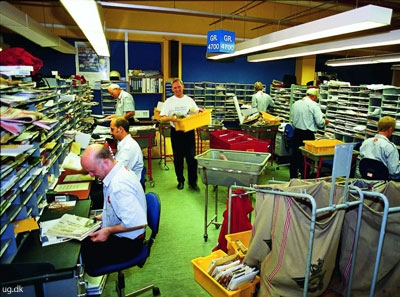
My father was a public sector leader for many, many years. For a good portion of his life he led all the “Postmen Pats” in one of Copenhagen’s larger post offices. At the time, a very heavy daily logistical challenge with a staff of around 250, and lots of manual effort required to process massive amounts of letters and face-to-face financial transactions involving real cash. I know it sounds medieval – real paper, cash, stamps, and ledger books the size of a 37-inch LCD screen …
Ancient ledger – Wikipedia
From a young age I could see how he somewhat effortlessly performed value-based leadership for hundreds of employees. A very diverse crowd mostly consisting of public servants with a stern do-it-for-queen-and-country attitude, but also larger groups of temps from various schools and universities.
It was back in the days before the appraisal interview was invented. My impression was that everyone in the office did their job quietly and did it well. On the other hand, the objectives were also quite clear and unambiguous, and the expected workload largely predictable. Occasionally, an employee would require a friendly corrective conversation. In the extreme – a follow up conversation(!)
Postmen Pats sorting the mail – UG.dk
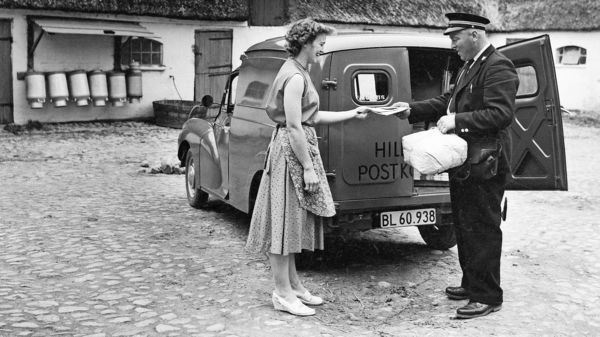
The job itself was not necessarily particularly complex in nature, but it took some personal tenacity. A postman had to turn up for duty at six o’clock in the morning, six days per week sorting the mail for their individual districts before loading their bicycles around eight o’clock. Year-round in all kinds of weather. It was also back in the days where the postman had more of a societal function. Postmen in Denmark would always be recognizable in a red uniform and would reach every far flung corner of the country. They would often carry a significant amount of cash for various payments ( wellfare, insurance etc.) and they would claim payments too.
1960 – Berlingske.dk
Because of the societal function my father was heavily reliant on the planned workforce to turn up. He himself had an unprivileged background and was quite aware that a “check in the mail” that didn’t turn up as planned could have significant impact on an entire family. As a child I remember how he would occasionally call me early in the morning on Saturdays and ask me to run a couple of blocks down the street to wake up one of the younger postmen who had such a hard time getting up in the morning and overslept fairly regularly. It was a two way street. My father really needed the hand on deck and the postman really needed (to keep) his job.
How far do you stretch to keep things going?
Hands – https://eap4socialjustice.net/
Don’t get me wrong. He was not a softy. My father was rather stern in his presence at work, and rather clear(!) in the way he communicated. But he also understood and prepared for the inevitable occasional hiccup. Particularly around the main holidays in Denmark such as e.g. Christmas and Easter my father would to a much larger degree take the social aspects of being a leader into consideration. Such holidays can be particularly hard on a smaller handful of employees. Maybe involuntarily away from their loved ones, divorced with bad memories (or bad conscience), tempted by the alco-devil etc. He just knew that one or two, who would otherwise work dilligently all through the year, would take the plunge. So as an example he had a backdoor agreement with the local watering holes that if a postman was about to take a slightly too long “break” they would give my father a quick call enabling him to ensure that he could send someone over to support the misfortunate postman so the mail would be delivered as planned. Today, the likelyhood of someone posting the postman’s misfortune on SoMe instead of assisting him, and consequently exposing both the postman and the post office as the subject of a public s… storm is rather high.
The generic storm …
Would that happen today? To my father, it was about protecting the brand, retaining the resource, and ensuring steady exeuction of process. He lived to be 87 years old. Struck by Alzheimer’s but very clear minded when it came to something that happened many, many years ago. When we discussed the subject he was absolutely convinced that there would be a lot less operational maneuverability in this day and age for exercising the type of servant leadership he did back then. Through his leadership he made room for a wide spectre of individuality, and ensured that these individuals would not only keep their job but would actually perform very well except for the occasional hiccup that never impacted delivery of the core product due to his proactive measures.
In summary, he gave trust to the postmen and postwomen. I am certain that some of them, in today’s workplace, would likely not enjoy the same kind of leadership approach. I understand and recognize that the world has changed – radically. But back then, simply because my father communicated his expectations, trust, authority and confidence in the individual, he instilled a very strong sense of responsibility that made the employee go the extra mile in return. Also in individuals who, today, would probably not be able to write up a fancy resume – or interview well at all – but yet perform very well on the job. It seemed to be more of a symbiotic relationship.
What is the extract? Projecting all of the above into a more contemporary setting, my point is: Engage in your staff and get to know them. Understand their challenges. Help them to grow to be a better version of themselves. As their leader, you are often far more likely to see obstacles ahead of them before they do. Address these obstacles proactively to enable success for both of you. Instill a sense of responsibility relative to their job role and preferably just a notch above. I guarantee you it will pay off.
In memoriam – Gunnar Madsen: 1934 – 2021 Requiescat in pace
Når vi taler om digitalisering må vi nødvendigvis også tale om digital ledelse. Og med ledelse mener jeg virksomhedens ledelse, afdelingsledelsen, eller bestyrelsen.
Det betyder at man som leder skal træde et skridt udenfor sin vante tankegang, iføre sig et par VR-briller og forestille sig hvordan nye tiltag, arbejdsprocesser og produkter generelt kan tænkes digitale, og hvordan man ansporer medarbejderne til ligeledes at tænke digitalt for virksomheden.
Den digitale leders huskeseddel bør derfor indeholde følgende punkter:
Interne arbejdsgange: Er virksomhedens logistiske drift, dvs. ordreindgang, lagerstyring, produktkvalitet, kontrakthåndtering, kundehåndtering mv. tilrettelagt gennem brug af (Cloud-baserede) applikationer? Det behøver ikke nødvendigvis at være én og samme applikation til det hele.
Photo by Stephen Dawson on Unsplash
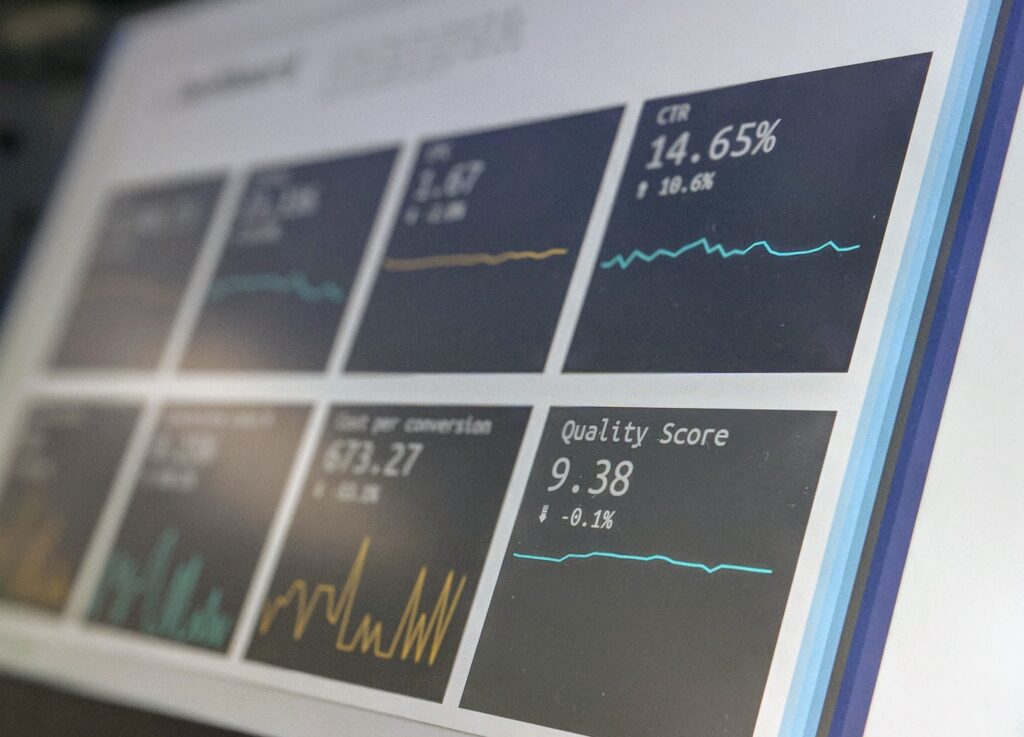
Business Intelligence: Er virksomhedens data (produktion, produktivitet, finans mv.) samlet og tilgængelig online? Er data tilgængelig på almindelig forespørgsel efter behov (on demand)? Er nøgledata også tilgængelig i et format der umiddelbart kan læses af ledelsen og bestyrelsen?
Digitaliseret ledelse: Samarbejdet i ledelsen og med bestyrelsen kan smidiggøres gevaldigt ved at gøre relevante data tilgængelig så ledelse og bestyrelse har samme lette adgang til de nøgledata der ligger til grund for beslutningerne i begge kamre.
Adgang til de samme data på samme tid gør samarbejdet langt mere gennemsigtigt. Det kræver naturligvis at man er parat til at operere med en høj grad af tillid og åbenhed i virksomheden, og betyder selvfølgelig ikke at bestyrelsen skal involvere sig dybere i driften af den årsag. Det burde blot gøre det nemmere at arbejde sammen om at holde kurs og hastighed.
Photo by Maarten Van Den Heuvel on Unsplash
Selvbetjening: Kan virksomhedens produkter og services bestilles af kunden online, og fremstilles og leveres uden, eller med et minimum af, medarbejderengagement? Giver virksomheden sine vigtigste samarbejdspartnerne adgang til selvbetjening? Er det gensidigt? Bruges selvbetjeningsdata til at forstå kundebehov og deraf individualiseret markedsføring? Digital kundeinteraktion er en af nøglerne til at forstå produktkravene i markedet.
Governance og GDPR: Kan virksomheden dokumentere at driften reelt følger de regler, praksis og processer, som virksomheden styres efter? Digitalisering giver udvidede muligheder for at følge disse områder tæt.
Videnbaser, kundeservice og support: Er der flere forskellige digitale kanaler tilgængelig for virksomhedens kunder? Altså adgang til kundeservice og support via chat, chat bots, online supportdokumentation, produkt- og brugsvejledninger mv. og kan kunden abonnere på disse når de bliver opdateret?
B2B: Er virksomheden digitalt forbundet med virksomhedens egne vigtigste leverandører og samarbejdspartnere? Hvordan står det til med digitaliseringen hos dem? Er den samtale i det hele taget påbegyndt?
Photo by Ian Schneider on Unsplash
EX (Employee Experience): Gør virksomheden det nemt for medarbejderne at være produktive og innovative? En virksomhed er ofte afhængig af hittepåsomheden af de eksperter man har ansat. Er der behov for en digital samarbejdsplatform?
Produktforbedringer: Hvordan forbedrer man virksomhedens nøgleprodukter digitalt? Er der en oplagt IoT-mulighed eller en anden digital tilføjelsesmulighed der forøger brugsværdien som giver produktet forøget salgbarhed og yderligere kant i forhold til konkurrenterne?
I fremstillingsvirksomheder må introduktion af robotteknologi være et uundgåeligt emne. Danmark er verdensledende på dette felt. Man kan (skal?) søge yderligere inspiration hos Odense Robotics.
Der er hjælp at hente
Erhvervsstyrelsen og SMV:Digital åbner jævnligt for hjælpepuljer til digital omstilling i danske SMVer.
Disse puljer er en gylden mulighed for at få sat gang i den digitale bevægelse i virksomheden, hvad enten det drejer sig om grundlæggende rådgivning og sparring for at afdække de digitaliseringsmuligheder der findes i virksomheden, eller det er at få eksekveret planen for de digitale løsninger der måske allerede er programsat i virksomheden.
I en tid hvor efterslæbet på digitalisering truer virksomheder på konkurrencedygtighed, og måske ligefrem på overlevelse, så giver objektiv rådgivning ofte det lille skub der skal til for at få konkretiseret planlægningen, eller givet det afgørende skub der skal til at få sat eksekveringen af digitaliseringsplanerne i gang.
Find mig og andre gode digitale rådgivere gennem SMV:Digital.
Many seminars and promotions have appeared recently offering to teach participants how to execute on strategy with the underlying message that boards and leaders either do not execute well, or find it difficult to execute.
What strikes me is that this conundrum is not at all new. Centuries ago the ever omnipresent Sun Tzu wrote:
“Strategy without tactics is the slowest route to victory. Tactics without strategy is the noise before defeat”
He kinda said it all right there.
On a slightly more recent note – but still 12 years ago – the Danish leadership advisor, Tune Hein wrote an article stating that leadership, at its core, is all about enabling the ability to execute on strategy – or simply just to execute on strategy! The article claim was based on an INSEAD-run test case concluding that without leadership’s ability to execute on strategy there shall be no results. It is the most important leadership capability. With reference to my opening statement the subject appears still to be very relevant. And for the record, I too tend to agree with the statement that Tune Hein put forward 12 years ago.
So why are leaders, 2500 years after Sun Tzu, still fumbling the ball when executing on strategy? I recognize that the the phrase “ensure execution of strategy” gives some people associations of a stern, one-dimensional leadership approach. Well, think again. Your strategy could be to drive a significant improvement of your employee EXperience.
Execution of a strategy can always be negatively influenced by several unforeseen factors (can you spell “COVID-19”?), and as Mike Tyson also famously stated: “Everybody has a plan until they get punched in the mouth”. If so, the outline below will hopefully inspire you to progress in a structured manner.
My fast track approach on how to execute successfully relies only a few basic, attainable leadership related elements only:
Leadership coherence
Measurements
Sense of ownership
Communication
All on board?
Photo by Markus Winkler on Unsplash
It requires the leadership team responsible for the overall execution to present itself to the organization as coherent, unified, and united on the strategy. The behavior of this team sets the tone, as it always does, for the entire company culture and therefore also enables, or disables, the overall ability to execute on strategy. No hidden agendas. No backdoor favors undermining everyone else’s efforts.
Over the past 30 years I have experienced how carefully formulated and even well communicated strategies that included very specific incremental targets and end goals have ended in quicksand due to either self-inflicted inability to progress due to disjointed business goals, plain and simple unwillingness to execute on common goals for personal reasons, or lack of ownership.
As I have alluded to in another post, my recommendation is to build your strategy bottom up but execute it top down. Let me say that again: Build bottom up and execute top down. As a leader you are the organizational enabler responsible for bringing out the full potential of people, process, and technology.
Where are we?
Photo by Denise Jans on Unsplash
With tactical activities in support of the strategy defined and propagated throughout the organization, progression must be tied to business objectives for teams and to operational targets at all hierarchical levels.
A coherent leadership team focused on a common strategy should ensure that corresponding “dashboards” are created to display and communicate overall progression. Preferably provided as a single, common go-to source that allows data views related to individual levels of the organization.
Photo by Lukas Blazek on Unsplash
I am a strong believer in giving authority with responsibility, but I’m also a believer in measuring progression. Granted, not all data can be collected electronically and thus auto populated into an on-demand dashboard. But there are other ways – even down to a flip-over in the lobby if necessary. As a minimum, expectations on what should be reported, how, and how often should be set clearly at all levels. The data gathered should be unambiguously sourced in the reasons why you built the strategy in the first place: increased market share, increased turnover, decreased cost, improved CX, improved EX, or all of the above.
Tracking measurements will help you and everyone involved to adjust direction, focus, and level of effort as you move forward.
Collaborative ownership
Getting naturally related departments on board with the program is rarely a leadership challenge. If the strategy requires collaborative efforts between business functions with relatively different business focus or culture – e.g. a collaborative effort between your engineer-driven highly technical Innovation Lab, and Finance – it requires an extra convincing leadership effort but it always starts with the leaders responsible for the respective business functions to propagate a common theme and consistent correlated objectives.
Photo by Edvin Johansson on Unsplash
Establish a sense of common ownership e.g. by ensuring that the respective leaders’ are communicating in unison what is required for the two departments to succeed collectively – and then delegate responsibility and authority. This nurtures an environment of interest in progression, openness, transparency, and motivation.
At the C-level, be servant and visibly engaged in removing the boulders in front of the leaders you hold accountable for tactical progress.
If you are executing across countries, regions or globally it obviously adds additional complexity, but never insurmountable complexity.
Commit by telling everyone
There is tremendous power in communicating committed targets openly and in writing. If you get up on a Monday morning and think to yourself “I’m going to start my day with a 5 km walk every day of this week”, it’s really easy to postpone the Tuesday walk because of <enter your favorite procrastination>. But if you, on your preferred SoMe page, tell all your friends about what you have planned to accomplish this week and put in a little table where you tick off the daily walks and write two lines about how good it was, you are far more likely to get it done.
If the incremental tactical goals and objectives are not communicated clearly and measured, how will the organization know if they are working on the right stuff?
If it is not explained how the involved stakeholders’ targets fit into the strategy, how will you establish a sense of ownership?
Communicate accomplishments and don’t be afraid to fail forward if that’s the case. Use the power in communicating milestones reached and milestones changed to revitalize engagement.
My tools will do it for me!
Photo by Barn Images on Unsplash
Isn’t there anything to be said about introducing process tool, approaches, and methodologies to ensure engagement and progression?
Yes, there obviously is. It can help drive collaboration and give you tactical overview and grip. But please don’t forget – it neither leads nor spearheads for you and in my experience there are most often human beings involved who are bringing along a kaleidoscope of perceptions, opinions, and often uncertainty. Remember that most successful historic large scale military strategies combined tactics and diplomacy.
My claim is that unless leaders recognize their responsibility for enabling execution by e.g. practicing the four elements above, your processing tool is a lot less likely to solve the execution conundrum for you – regardless of the tool.
To rewrite Sun Tzu in layman’s terms:
If you define your direction but not the incremental steps and targets, or define all kinds of steps and targets without a common direction
– or how to get the scoop of ice back in the cone and still be able to enjoy it
I have had the privilege to attend several roundtable discussions on Cyber Security and Business Continuity Planning (BCP) at the U.S. Embassy in Copenhagen in connection with Cyber Security specialists from around the world visiting the Department of Commerce.
Although I am well versed in Cyber Security I do not consider myself a Cyber Security specialist. But having established and run the global Major Incident Management department for a very large corporation, I do consider myself a Business Continuity Planning specialist and it is in that capacity I have primarily been adding value to these roundtable discussions.
Not taking the protection of your IT infrastructure adequately seriously and not taking appropriate measures to fence it off technologically and culturally (please, do not click that attachment link …) is considered an open invitation to perpetrators around the globe. They will find the cracks in your firewall and a raft to cross that moat that was supposed to keep trespassers out of your hair.
Your first priority is therefore to establish both a cultural and technological perimeter around your infrastructure – and maybe get someone externally to give a quick test before your declare yourself safe?
Having established that perimeter is critical. But companies seem to consider having purchased a Cyber Security license of sorts an all encompassing insurance policy that keeps them safe at night and their IP under lock and key. It really is not an insurance policy against productivity loss. Bad things can and will still happen. Cyber Security specialists evangelize that too.
A lot fewer companies have documented clear Standard Operating Procedures in the area of BCP – that is, the process and planning required to kick in, in the unfortunate event that your ability to run or reestablish your business functions is impaired. What processes kick in when some dormant virus breaches your security, or your offices are under three feet of water, or have no power for days, or your CEO is abducted by aliens?
BCP is AS IMPORTANT as fencing off your company technologically. The shorter it takes to return to a state of normality, the less productivity loss you will experience. If teams and individuals know how to react, and with what measures relative to the situation, you are sure to keep your board at ease and your shareholders happy.
Who is going to coordinate reestablishing normality?
Who steps in when leaders responsible for critical business areas cannot be reached or are unable to work?
What needs to be reestablished first?
My advice is to:
Analyse in what order you resurrect or reestablish your business functions and services – and how!
Make sure it also includes who is responsible for what business function, and who’s going to be the back-up – and the back-up’s back-up
Build playbooks and keep them current through a three to six-month revision cycle
If you are a leader in a larger organization, I’m sure you have been asked to rank staff in your organization. In my experience some leaders and managers are, unfortunately, using ranking and rating interchangeably while they are really an expression of two different scales.
Rating is an expression of how an employee is performing within the scope of a defined job type over a specific period of time.
Ranking is how the employee ranks against the overall review of competencies and skills within the organization, required to run your business successfully.
As an example, a Junior Engineer could be top rated but would rank lower organizationally against staff with lower performance rating. The point is that if you use ranking and rating interchangeably to adjust your organizational competencies, or simply the size of your organization, you risk losing staff members who are key critical to your business.
The dark side of keeping organizational ranking current is that it makes it somewhat more approachable to identify those ranking lowest relative to the changes you have to make. A word of caution – it is of course not always that straight forward and there is an obvious caveat with doing ranking if you apply it unconditionally on a raw “per team” approach.
Consider the following scenario: You have two teams reporting to you. Team A is a very large team on the production floor with basic technical skills, while team B is a small team of highly specialized individuals. You are faced with a business demand to reduce your staff by 15% overall. From a fairness perspective, which is also important to continuous motivation, you could argue that both teams would have to chip in with a 15% reduction i.e. pull out your ranking lists for each team and cut the lowest 15%. The problem with that approach is that you may loose significant talent in the specialized team that is either very difficult or very expensive to re-hire (often both), hence reducing by 15% in the specialized team has a disproportionate negative impact of your ability to be successful (remember ranking vs. rating).
My advice is that you:
Keep your organizational ranking current
Consolidate your overall organizational ranking as it relates to Business Continuity and Strategy
Since early 2020 permanent remote management has become a reality for managers and leaders who have never been exposed to exercising leadership without the privilege of being face to face with the employee. Remote working has become a necessity.
I have managed and led internationally, remotely, permanently, and successfully since 1996. In the late 1990s there were no real video options available and having a team conference call was a novelty that, albeit, very soon became the norm. Today, video conferencing is available through almost any device type and is used heavily in the workplace.
Remote management will challenge your EQ as a leader. If you are faced with remote management responsibilities for the very first time it is important that you start by establishing a picture of “new” normality. Consider you are now leading people who must mix and match their private life with their work life to an extent they never expected at all. You can no longer rely on your understanding of normality in a physical office setting.
To establish a picture of normality you will have to start off with a relatively high meeting frequency e.g. short daily stand-up meetings Scaled Agile style (scroll and look for DSU), and in addition make sure that you schedule individual 1:1 conversations with the staff reporting to you. If you are logistically unable to perform this communicative exercise every day from the get go, then every other day is a good starting point too.
As you progress and assess your ability to execute under the circumstances you will clearly identify whom of your employees will require more interaction to reach the desired level of productivity and who is operating more independently. Again, bear in mind that individuals performing well in an office setting may not thrive at home. This is not to say that people who require more interaction are less valuable. More interaction could be required simply due to the complexity of their current responsibilities. They might require more interaction because they need more direction and confirmation that they are moving down the right path.
Within a relatively short timeframe you should have established a picture of what can be considered “normal” in a remotely managed environment – and when you have established that you will, with an adequate quantum of EQ applied, be able to identify the anomalies you must address. To make an analogy it’s comparable to the approach the cyber threat system provided by Darktrace takes (check them out). Very coarsely explained, Darktrace is using AI to establish a picture of infrastructure normality i.e. instead of matching infrastructure events against e.g. a list of known viruses they will monitor your infrastructure against the “normality” picture and thus react to anomalies very quickly.
This is largely the same approach that you want to take with remote management. If you have been Covid-19 expelled from the office then get going now on establishing your understanding of normality, and your ability to lead through the “anomalies” will be so much greater.
My basic advice is:
Interaction is essential. Begin with high frequency DSUs and 1:1 conversations, and adjust as you learn what the individual requirements are
Listen well
Introduce regular team meetings with more social and culture related content to signal that you are truly interested in the well being of your staff and are ready to invest in it
Introduce team gamification on both business goals and cultural items. Gamification will invariably increase x-team social communication
We use cookies on our website to give you the most relevant experience by remembering your preferences and repeat visits. By clicking “Accept”, you consent to the use of ALL the cookies.
This website uses cookies to improve your experience while you navigate through the website. Out of these, the cookies that are categorized as necessary are stored on your browser as they are essential for the working of basic functionalities of the website. We also use third-party cookies that help us analyze and understand how you use this website. These cookies will be stored in your browser only with your consent. You also have the option to opt-out of these cookies. But opting out of some of these cookies may affect your browsing experience.
Necessary cookies are absolutely essential for the website to function properly. This category only includes cookies that ensures basic functionalities and security features of the website. These cookies do not store any personal information.
Any cookies that may not be particularly necessary for the website to function and is used specifically to collect user personal data via analytics, ads, other embedded contents are termed as non-necessary cookies. It is mandatory to procure user consent prior to running these cookies on your website.